Woven Wealth: How Velvet Becomes a Multi-Generational Fashion Legacy
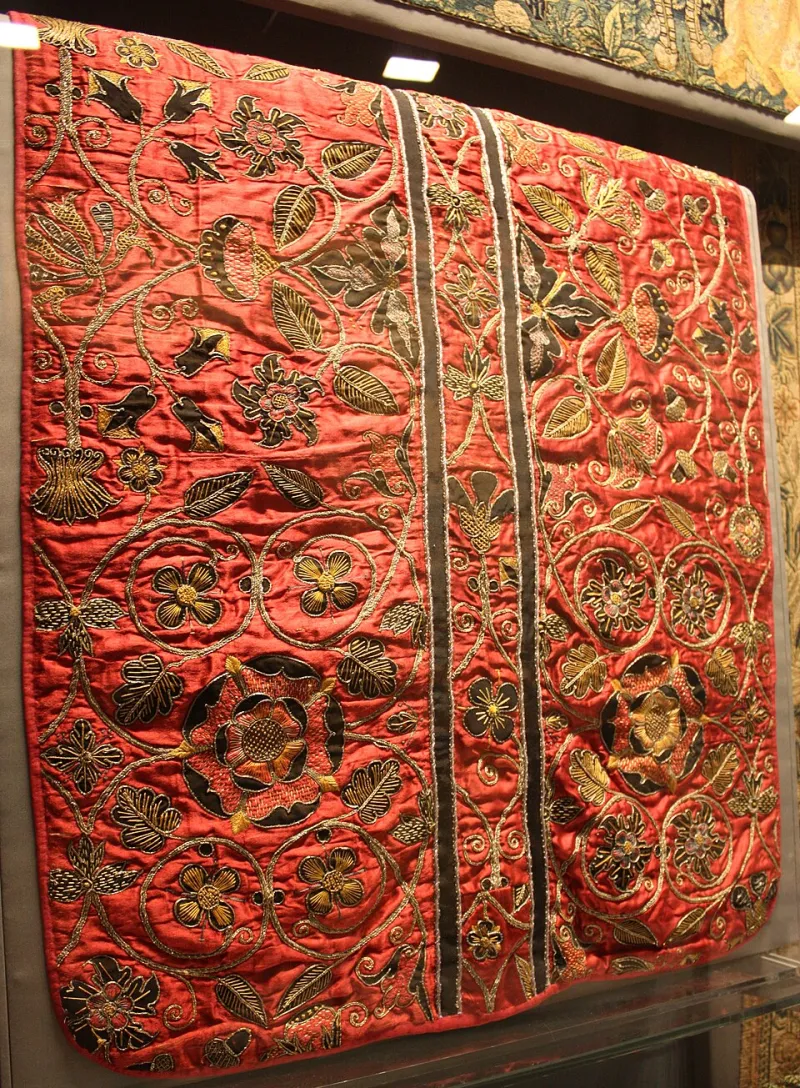
Photo: Wikipedia Loves Art participant "va_va_val", CC BY-SA 2.5, via Wikimedia Commons
There is a particular kind of satisfaction that accompanies the discovery of a grandmother's velvet evening coat, still supple, still commanding, folded within layers of archival tissue in the back of a cedar closet. It does not merely evoke memory — it embodies it. For a growing constituency of American collectors and style-conscious inheritors, this experience is no longer accidental. It is the result of deliberate, forward-thinking acquisition.
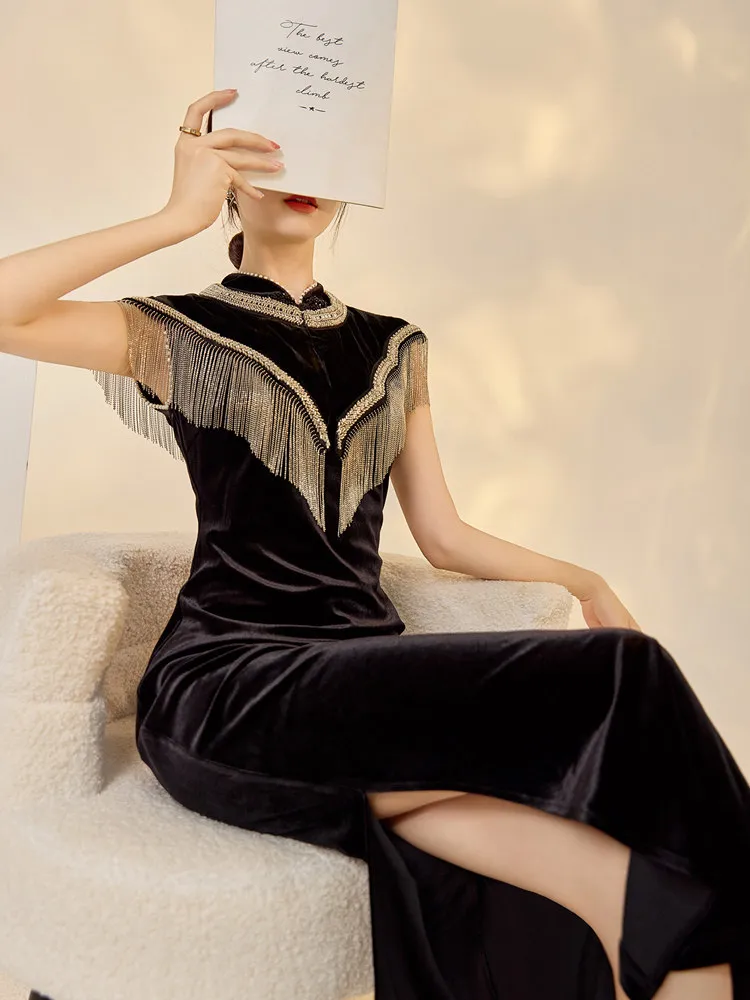
Velvet, with its dense pile and extraordinary capacity to absorb and reflect light, has long occupied a singular position in the hierarchy of textiles. What is changing now is the framework through which affluent consumers choose to own it. Rather than viewing a velvet blazer or a silk-velvet opera coat as a seasonal statement, discerning buyers are beginning to evaluate such pieces through the lens of legacy — asking not only how a garment looks today, but how it will hold up across twenty, thirty, or fifty years of careful stewardship.
The Anatomy of an Heirloom: What Separates Investment Pieces from the Ordinary
Not every velvet garment merits the designation of heirloom. The distinction lies in construction, fiber content, and the integrity of the maker's hand.
The most enduring pieces are typically woven from natural fiber foundations — silk velvet, of course, commands the highest regard, but high-grade cotton velvet and mohair velvet also demonstrate remarkable longevity when properly maintained. Synthetic pile, while visually convincing at the point of sale, tends to flatten irreversibly and loses its luster within a decade of regular wear. When evaluating a prospective acquisition, the hand-feel test remains the most reliable instrument: genuine silk velvet offers a coolness and a fluid drape that no synthetic can convincingly replicate.
Beyond fiber content, construction details signal quality with equal authority. Examine the seams — hand-felled finishes, bound buttonholes, and fully canvassed interiors speak to a standard of tailoring that resists the passage of time. Provenance matters as well. Pieces produced by established American and European ateliers, or by heritage houses with documented production standards, carry an implicit guarantee of material integrity that anonymous fast-fashion cannot approach.
Color, too, plays a role in longevity assessment. Deep jewel tones — midnight sapphire, claret, forest green, and the perennial authority of black — have demonstrated consistent relevance across multiple generations of fashion. Trend-reactive colors, however vibrant at the moment of purchase, risk a kind of cultural obsolescence that no amount of preservation can fully overcome.
Building the Collection: A Philosophy of Intentional Acquisition
The most compelling heirloom textile collections are not assembled hastily. They are built over years, even decades, through a philosophy that prizes restraint and discernment over volume.
Many collectors operating in this space recommend beginning with foundational silhouettes — a tailored velvet blazer in a classic cut, a floor-length evening skirt, or a structured coat — before expanding into more expressive pieces. These anchoring garments serve a dual purpose: they are immediately wearable in the present and sufficiently timeless to remain relevant across future generations.
Auctions and estate sales represent one of the more sophisticated acquisition channels for legacy-minded collectors. American auction houses such as Christie's and Doyle regularly feature textile lots that include documented velvet garments from the mid-twentieth century, many in extraordinary condition. The provenance documentation accompanying such pieces adds a narrative dimension that elevates them beyond mere clothing into the category of cultural artifact.
Private vintage dealers — particularly those specializing in couture and high-end ready-to-wear — offer another avenue, often with the added benefit of curatorial expertise. A knowledgeable dealer can identify period-correct construction techniques and authenticate fiber content in ways that casual browsing cannot.
Preservation as Practice: Protecting Velvet Across Decades
The most exquisite collection is only as enduring as the care it receives. Velvet's dense pile, while extraordinarily beautiful, is also susceptible to specific forms of damage that require proactive management.
Storage environment is the first and most critical consideration. Velvet garments should never be folded along the pile — doing so creates permanent crush lines that no amount of steaming can fully reverse. Instead, significant pieces ought to be stored hanging, on padded or covered hangers that support the full weight of the garment without distorting the shoulder line. For long-term archival storage, acid-free tissue paper used as a lining within a breathable cotton garment bag provides an additional layer of protection against environmental degradation.
Climate control is equally non-negotiable. Humidity fluctuations represent the primary enemy of natural fiber textiles. A stable environment — ideally between 60 and 65 degrees Fahrenheit with relative humidity maintained between 45 and 55 percent — will dramatically extend the lifespan of even the most delicate silk velvet. Many serious collectors in American cities such as New York and San Francisco invest in dedicated climate-controlled storage solutions for their most significant pieces.
Professional cleaning, when required, should always be entrusted to a specialist with demonstrable experience in luxury textiles. Standard dry cleaning, while acceptable for many fabrics, can strip the natural oils that give silk velvet its characteristic luminosity. A textile conservator — rather than a conventional cleaner — is the appropriate resource for pieces of genuine heirloom value.
The Emotional and Financial Calculus of Textile Inheritance
The conversation around heirloom fashion is, at its core, a conversation about value in the fullest sense of the word.
Financially, well-preserved velvet pieces from documented makers have demonstrated consistent appreciation in the secondary market. A pristine silk-velvet evening gown from a recognized mid-century American designer, properly stored and accompanied by provenance documentation, may command multiples of its original retail price at auction. This is not speculative — it reflects the market's recognition that genuine quality in textiles is becoming increasingly rare.
The emotional dimension, however, may ultimately carry greater weight. There is something profound in the act of passing a garment from one generation to the next — a transfer not merely of fabric and thread, but of taste, identity, and personal history. When a daughter inherits her mother's velvet coat and chooses to wear it to her own significant occasion, she is participating in a continuity that transcends fashion entirely.
This is the deeper promise of the heirloom textile collection: that beauty, when properly honored, does not diminish with time. It deepens.