Beyond Binary: How Velvet Is Rewriting the Rules of Gendered Dressing in American Luxury Fashion
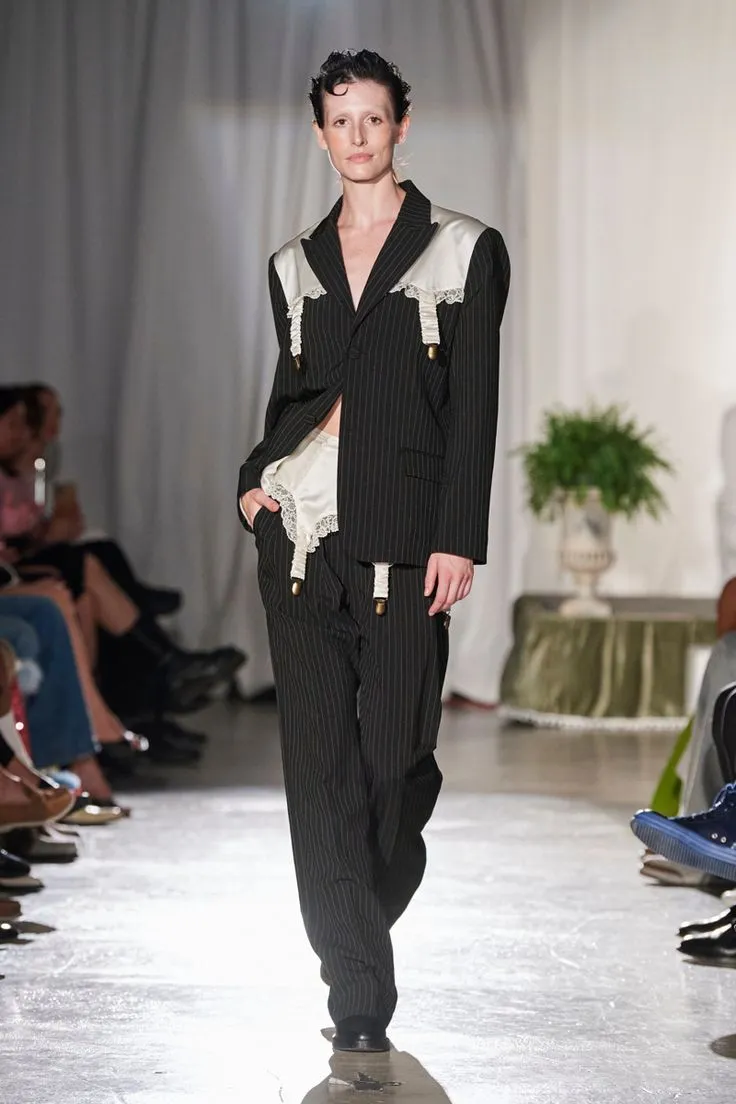
Photo: gender neutral velvet luxury fashion suit editorial photography, via i.pinimg.com
There is something quietly revolutionary about the way velvet moves. Its pile catches light at unexpected angles, shifting from shadow to luminescence with every gesture. It is a fabric that refuses to be ignored — and increasingly, it is a fabric that refuses to be categorized.
For centuries, velvet carried distinct social and sartorial signifiers. In Renaissance courts, it draped the shoulders of kings and cardinals alike. By the twentieth century, its associations had narrowed considerably: velvet became shorthand for feminine evening wear, for the velvet headband and the formal gown, for a certain kind of softness that Western fashion had quietly assigned to women. Men, meanwhile, were largely steered away from its more expressive possibilities — permitted, at most, a velvet blazer in deep burgundy at the holiday party.
That era is drawing to a close.
A Fabric Without a Fixed Address
Across the American luxury market, something unmistakable is unfolding. Velvet is no longer content to occupy a single side of the wardrobe. Designers are cutting it into sharp, architectural blazers intended for any body that chooses to wear them. Tailors are constructing velvet trousers with a fluidity that speaks to movement rather than gender. And consumers — particularly those who have reached a point in their lives where personal authenticity outweighs social convention — are responding with genuine enthusiasm.
The shift is both cultural and commercial. According to several luxury retail analysts, demand for gender-neutral and gender-inclusive velvet pieces has grown considerably among high-net-worth American shoppers between the ages of thirty-five and sixty. These are individuals who have already mastered the conventional codes of luxury dressing. What they seek now is something more personal — a garment that reflects not their role, but their character.
"There is a certain confidence that comes with wearing something because it speaks to you, not because it was designed with you as a predetermined category in mind," observes one New York-based stylist who works exclusively with high-profile clientele across all gender expressions. "Velvet, more than almost any other fabric, communicates that confidence. It is not a timid choice. It announces itself."
The Historical Irony
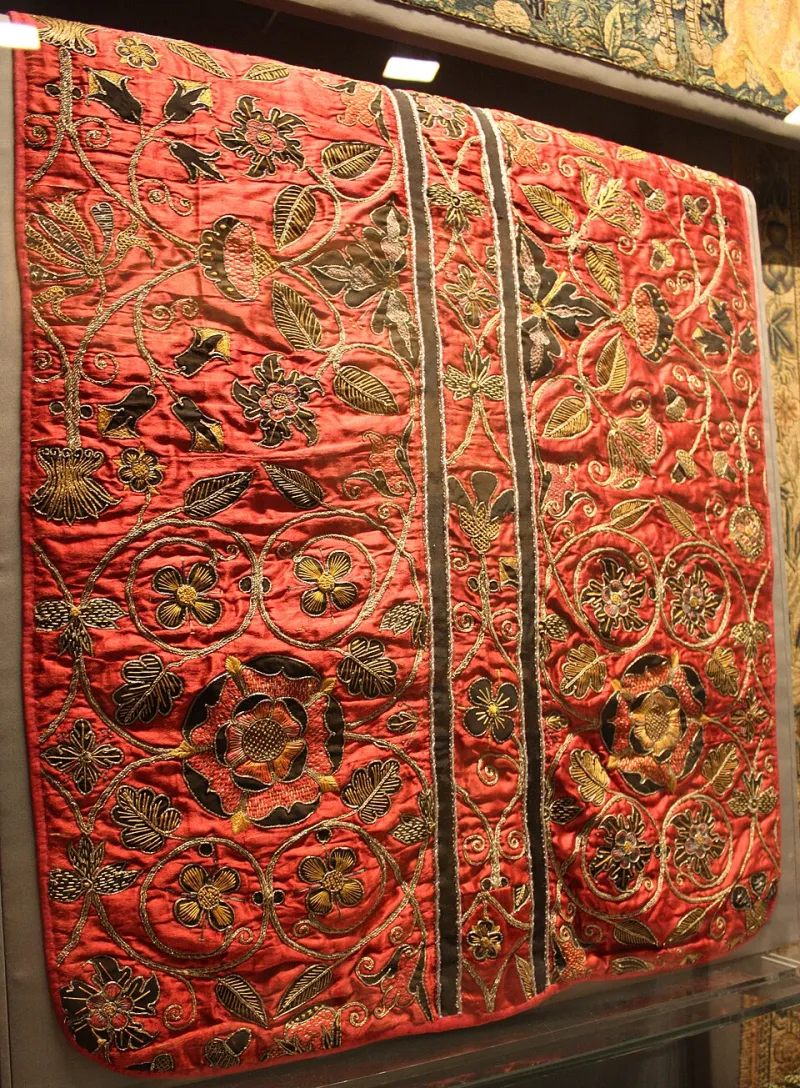
What makes this moment particularly resonant is the historical irony embedded in it. Velvet was never, in its earliest incarnations, a feminine fabric at all. Medieval and early modern European courts dressed their most powerful male figures in velvet — it was a direct expression of wealth, authority, and social standing. The feminization of velvet was itself a relatively modern construction, a product of the twentieth century's rigid codification of gendered dress.
Contemporary designers working in the luxury space are acutely aware of this lineage. Several prominent American and European houses have spoken publicly about their desire to return velvet to something closer to its original democratic grandeur — a textile defined not by who wears it, but by the quality of its construction and the intention behind its design.
At recent New York and Los Angeles runway presentations, velvet appeared in silhouettes that deliberately resisted easy categorization: oversized velvet coats with clean, ungendered proportions; velvet suits cut with a relaxed authority that spoke to boardroom and gallery opening alike; velvet evening separates that could be assembled in any number of configurations depending on the wearer's vision for the evening.
Tailoring as a Form of Liberation
Perhaps nowhere is the transformation more visible than in the realm of velvet tailoring. The bespoke suit has long been a masculine institution in American luxury dressing. Today, however, some of the country's most distinguished tailoring houses are reporting that their velvet commissions come from an increasingly diverse range of clients — and that the conversations around fit, silhouette, and intention have grown correspondingly richer.
"When someone comes to us asking for a velvet suit, the first question is no longer about gender," explains one master tailor whose New York atelier has dressed clients across industries and identities for more than two decades. "The first question is about presence. What do you want to communicate when you walk into a room? Velvet has a way of amplifying whatever answer you give."
This approach — beginning with the individual rather than the category — is quietly reshaping how luxury velvet garments are conceived, constructed, and sold. Fit is calibrated to the specific body in question. Pile direction and weight are chosen for the effect they create in motion, not for adherence to a predetermined template. The result is clothing that feels genuinely personal in a way that off-the-rack garments, however beautifully made, rarely achieve.
The Role of Cultural Visibility
Beyond the atelier, cultural visibility has played a meaningful role in expanding velvet's reach across gender expressions. American public life has produced a growing number of figures — in entertainment, in business, in the arts — who wear velvet with an ease and authority that quietly normalizes what might once have been considered unconventional.
When a prominent male musician appears at a major awards ceremony in a richly colored velvet suit, or when a non-binary cultural figure is photographed in a velvet evening coat of extraordinary construction, the effect on the broader conversation is considerable. Luxury consumers who follow these figures do not merely observe — they internalize. They begin to ask different questions of their own wardrobes.
Style influencers operating in the luxury space have noted a marked increase in audience engagement when they feature velvet pieces styled in gender-expansive ways. "The response is almost always positive," notes one widely followed figure whose content focuses on elevated, considered dressing. "There is a real hunger for permission — for someone to demonstrate that these choices are not only acceptable but genuinely sophisticated."
Acquiring Velvet on Your Own Terms
For the discerning American consumer ready to engage with velvet beyond inherited convention, a few principles are worth holding in mind.
First, quality remains paramount. The liberation from gendered dressing does not diminish the importance of textile excellence — if anything, it elevates it. A velvet garment of inferior construction will undermine the wearer's intention regardless of how boldly it is styled. Seek pieces with a dense, even pile, clean seam finishing, and a weight that suggests substance rather than economy.
Second, consider proportion carefully. Velvet carries visual weight, and silhouettes that feel balanced on one body type may overwhelm another. Work with a knowledgeable tailor or stylist who can help you identify the proportions that serve your particular frame and presence.
Third, resist the impulse to over-explain. One of the great privileges of dressing with genuine sophistication is the freedom to simply inhabit your choices without apology or annotation. Velvet worn with conviction requires no justification.
A Fabric for the Fully Realized Self
What velvet ultimately offers — to anyone willing to receive it — is an invitation to dress as a fully realized individual rather than as a representative of a category. Its history is long enough to contain multitudes. Its tactile richness is generous enough to serve any body, any occasion, any vision of the self.
The rebellion, if one wishes to call it that, is less a disruption than a return. Velvet was always too magnificent to belong to any single tradition. It has simply been waiting for the culture to catch up.