Dressed from the Inside Out: How Velvet Becomes a Vessel for Personal Authority

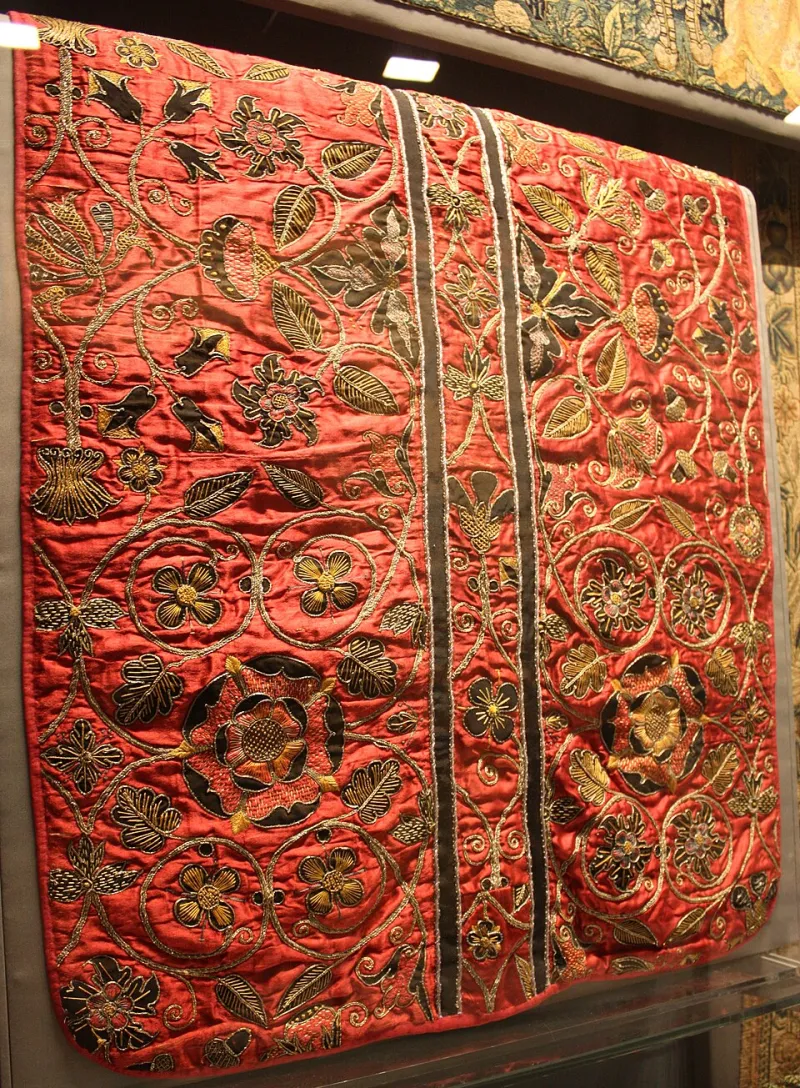
Photo: micadew from US, CC BY-SA 2.0, via Wikimedia Commons
There is a peculiar moment that many velvet wearers describe in strikingly similar terms. It occurs not in front of a mirror, not during a compliment received across a dinner table, but in the quiet seconds before stepping into a room. The hand grazes the sleeve. The pile yields, then recovers. And something internal — some hesitation, some ambient uncertainty — dissolves.
This is not sentimentality. It is, increasingly, the subject of serious inquiry into the psychology of dressed identity. And it raises a question worth examining with care: why does velvet, of all fabrics, seem to function as a confidence catalyst in ways that even fine wool or tailored silk cannot fully replicate?
The Sensory Contract
To understand velvet's psychological grip, one must first appreciate its physical architecture. Unlike woven fabrics that present a uniform surface, velvet is constructed with a cut pile — thousands of tiny fiber loops sheared to create a directional nap. The result is a textile that responds differently depending on the angle of light and the direction of touch. It is, in a literal sense, a fabric that demands engagement.
Behavioral psychologists who study the intersection of clothing and cognition have long noted that tactile richness in garments tends to activate what they call "embodied self-awareness" — a heightened attentiveness to one's own physical presence. When a material is this texturally distinct, the wearer cannot easily ignore the body it clothes. That heightened awareness, researchers suggest, correlates with increased feelings of groundedness and decisiveness.
In simpler terms: velvet makes you feel like someone who has made a deliberate choice. And in a culture saturated with fast options and disposable aesthetics, deliberateness is itself a form of power.
Why Softness Requires Strength
Here lies the paradox at the heart of velvet dressing. The fabric is, by every physical measure, gentle. It yields to pressure. It invites the touch of others. It carries none of the rigid authority of structured tweed or the cool remove of polished leather. And yet, those who wear it with conviction consistently project — and internalize — an uncommon sense of self-possession.
This apparent contradiction resolves itself when one considers what choosing softness actually signals. In a society that equates authority with hardness, angularity, and volume, arriving in velvet is an act of quiet defiance. It announces that one's sense of self does not require the armor of conventional power dressing. The wearer has, in effect, decided that their presence is sufficient.
Style figures who have built their public identities around velvet — from celebrated American designers to prominent cultural patrons frequently photographed at New York and Los Angeles galas — often speak of the fabric in terms that echo this logic. The recurring theme is not luxury for its own sake, but luxury as a form of self-declaration. Velvet, they suggest, is what you wear when you no longer need to prove anything.
The Ritual Dimension
There is also a ritual quality to velvet that amplifies its psychological effect. Premium velvet garments, by their very nature, require intention. They cannot be thrown into a standard wash cycle. They must be stored with care, brushed against the pile, kept from prolonged compression. Owning velvet well is a practice — and practices, by their repetitive nature, reinforce identity.
The affluent consumer who tends to a velvet blazer with the same attentiveness they might give to a prized book or a carefully maintained piece of furniture is, in a meaningful sense, rehearsing a particular relationship with quality. That rehearsal has psychological consequences. It cultivates patience, discernment, and a resistance to the disposable. Over time, these qualities migrate from the care of the object to the character of the person.
This is why velvet ownership, at its most considered, is less about possession than about cultivation. The garment does not simply hang in the closet waiting to be worn. It participates in an ongoing dialogue between the wearer and their own values.
Confidence Beyond the Compliment
Conventional luxury signaling operates on an external axis: the recognition of a logo, the acknowledgment of a price point, the visible markers of status that require an audience to function. Velvet, interestingly, operates differently. Its most powerful effects are inward.
Consumers who report feeling most themselves in velvet rarely cite the reactions of others as the primary source of that feeling. Instead, they describe something more private — a sense of alignment between how they feel internally and how they are presenting externally. Psychologists might frame this as congruence: the experience of one's outer presentation accurately reflecting one's inner state.
This congruence is, arguably, the deepest form of confidence available to a dressed person. It does not depend on validation. It does not fluctuate with the opinions of a room. It is self-sustaining in a way that logo-dependent luxury, however beautiful, often is not.
Velvet, with its insistence on tactile presence and deliberate choice, creates the conditions for that congruence with unusual reliability. The fabric does not allow the wearer to be passive. It asks something of them — attention, intention, a willingness to be noticed on their own terms.
Dressing for Your Own Authority
The practical implication of all this is perhaps the most useful takeaway for the discerning dresser. If velvet's psychological benefits are real — and the evidence, both empirical and anecdotal, suggests strongly that they are — then the question of how one incorporates it into a wardrobe becomes genuinely consequential.
The answer, consistent with everything the fabric seems to teach, is to begin from the inside. Not with the question of what will impress, but with the question of what feels true. A single velvet piece chosen with that criterion will outperform a wardrobe full of garments selected for external approval.
A midnight-toned velvet blazer worn to a board meeting in Chicago. A deep burgundy velvet column dress chosen for a philanthropic gala in Washington. A velvet smoking jacket reserved for evenings at home when solitude itself deserves to be honored. In each case, the garment is not performing for an audience. It is reinforcing a private conviction.
That, ultimately, is the velvet paradox resolved. The softest fabric in the luxury wardrobe demands not timidity, but a settled, unshakeable sense of who one is. It rewards those who bring their full selves to the wearing of it — and gently exposes those who do not.
To dress in velvet is, in the most precise sense, to dress from the inside out.