The Fabric of Feeling: How Velvet's Tactile Power Shapes Luxury Identity and Consumer Desire

Photo: woman touching luxurious velvet fabric in elegant boutique close up, via images.stockcake.com
There is a moment, familiar to anyone who has reached toward a bolt of fine velvet in a well-appointed boutique, when the hand arrives before the mind. The fingers extend, make contact, and something shifts — a quiet recalibration of expectation, a recognition that this object occupies a different register of experience entirely. That moment is not incidental to luxury fashion. According to those who study the intersection of sensory perception and consumer behavior, it may be the most consequential moment in the entire acquisition journey.
At Velourss, we have long understood that our editorial identity — Draped in Luxury. Defined by Touch. — is not merely poetic framing. It is a precise articulation of how premium textiles, velvet foremost among them, communicate value in ways that transcend the visual.
Why Sight Alone Is an Insufficient Luxury Signal
The contemporary consumer landscape is saturated with visual luxury cues. High-resolution photography, cinematic brand films, and meticulously curated social feeds have made the appearance of opulence widely accessible, even imitable. A fast-fashion garment photographed under the right conditions can approximate the visual grammar of a couture piece. This visual inflation has created a credibility problem for luxury brands that rely solely on aesthetic signaling.
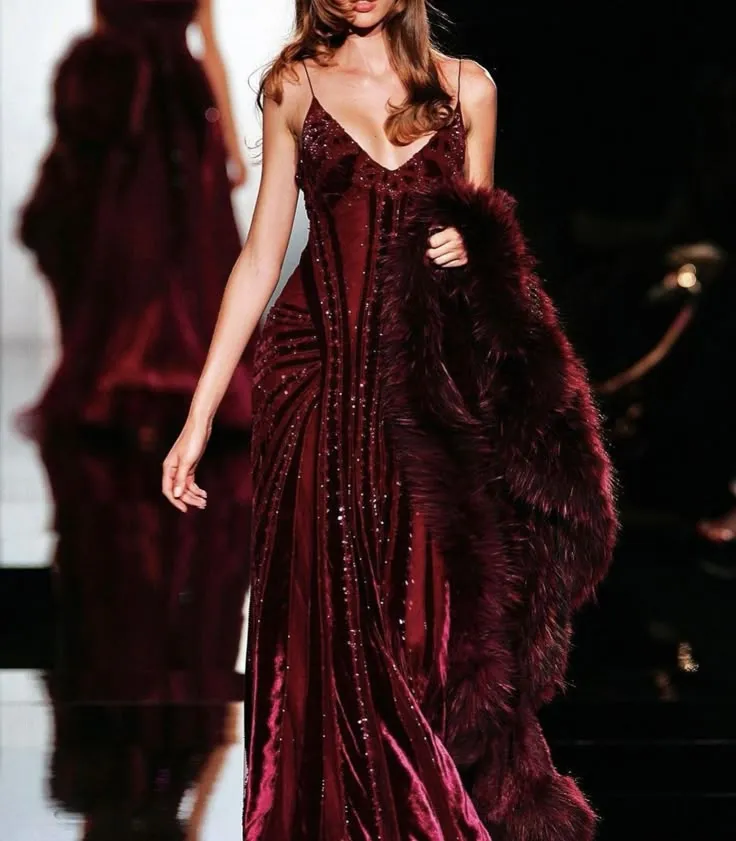
Velvet, by contrast, resists photographic flattening. Its pile — the dense, upright fibers that define its surface — interacts with light in ways that shift dramatically depending on angle, pressure, and movement. A velvet blazer on a hanger communicates elegance; that same blazer worn and moving communicates something altogether more complex. But neither image fully prepares the hand for the experience of touch. The softness, the warmth, the subtle resistance of quality pile against the palm — these are sensations that no screen can transmit.
Luxury psychologists refer to this phenomenon as haptic superiority: the tendency for tactile information to override or significantly outweigh visual data when forming assessments of quality and value. For the affluent consumer who has encountered enough imitations to develop a calibrated skepticism toward visual cues alone, touch becomes the definitive authentication mechanism.
The Neurological Architecture of Textile Desire
The hand contains one of the highest concentrations of sensory nerve endings in the human body. When those receptors encounter velvet's characteristic pile — particularly in grades of silk velvet or high-thread-count cotton velvet — the sensory cortex receives a richly detailed report. Warmth. Directionality. Compression and rebound. Smoothness interrupted by the faintest, most pleasurable resistance.
This neurological richness is not lost on fashion industry professionals who work at the intersection of material selection and brand positioning. The choice to use premium velvet in a collection is, at its core, a decision to invest in the consumer's nervous system — to create a physical memory that no amount of competitive visual advertising can dislodge.
There is also the matter of what researchers describe as embodied cognition: the way physical sensations shape abstract judgments. When an affluent consumer holds a velvet garment and registers its quality through touch, that tactile experience informs her assessment not only of the fabric but of the brand, the occasion for which the piece is intended, and her own identity as someone who chooses such things. Touch, in this framework, is not merely a confirmation of quality. It is a form of self-definition.
Velvet as the Anti-Fast-Fashion Textile
The rise of disposable fashion has produced, among discerning consumers, a corresponding appetite for its opposite. The term slow fashion has entered the mainstream lexicon, but its most persuasive ambassador is not an ethical argument — it is a tactile one. A garment that feels genuinely extraordinary in the hand does not invite the casual relationship that fast fashion demands. It invites stewardship, ceremony, and sustained attachment.
Velvet is, by its very nature, a fabric that insists upon being treated well. Its pile is directional, its surface responsive to handling, its character altered by improper care. This is not a design flaw — it is a form of built-in intimacy. The consumer who owns a velvet piece learns its particularities, adapts her behavior to accommodate its needs, and in doing so forms a bond with the garment that is categorically different from her relationship with a polyester blouse purchased on impulse.
For the affluent American consumer — one who has, by definition, the resources to choose quality over convenience — this relationship carries genuine appeal. It positions velvet ownership not as consumption but as custodianship, not as acquisition but as discernment made permanent.
The Digital Shopping Paradox and Velvet's Response
The shift toward e-commerce has introduced a fundamental tension into luxury retail. The curated store environment — ambient lighting, attentive service, the deliberate staging of tactile encounters — cannot be replicated on a product page. Luxury brands have invested heavily in visual storytelling to compensate, but the haptic gap remains.
For velvet specifically, this gap has created a peculiar dynamic: online imagery can suggest richness, but only the physical garment can confirm it. This is why velvet purchases made through digital channels tend to generate either extraordinary loyalty or swift return — there is little neutral ground when the tactile reality either meets or fails to meet the expectation the image created.
The implication for discerning consumers is clear: velvet rewards the in-person encounter. The boutique visit, the tactile assessment, the deliberate consideration before purchase — these are not inefficiencies in the acquisition process. They are the process. They are how a consumer determines whether a piece is worthy of her wardrobe and her investment.
Touch as Brand Loyalty's Deepest Foundation
Perhaps the most commercially significant dimension of velvet's tactile power is its relationship to brand loyalty. Research into luxury consumer behavior consistently identifies sensory satisfaction — particularly tactile satisfaction — as a stronger predictor of repeat purchase than price, visual appeal, or even brand prestige. A consumer who has experienced the specific hand of a house's signature velvet has an experiential reference point that abstract brand messaging cannot create.
This is why the most enduring luxury textile brands do not merely sell garments. They sell a recognizable sensation — one that the consumer's hands remember even when the garment is not present. When she encounters that sensation again, in a new collection or a different silhouette, the recognition is immediate and deeply personal.
At Velourss, this understanding informs everything from our editorial voice to our curation philosophy. We recognize that the women who seek out premium velvet are not simply purchasing fabric. They are investing in a sensory experience that affirms their taste, honors their discernment, and provides a form of pleasure that the digital world, for all its sophistication, has not yet learned to replicate.
In a fashion landscape increasingly mediated by screens, velvet remains stubbornly, magnificently analog — and that, perhaps more than any other quality, is the source of its enduring authority.