Velvet's Grand Return: How Fashion's Most Opulent Fabric Conquered the Modern Wardrobe
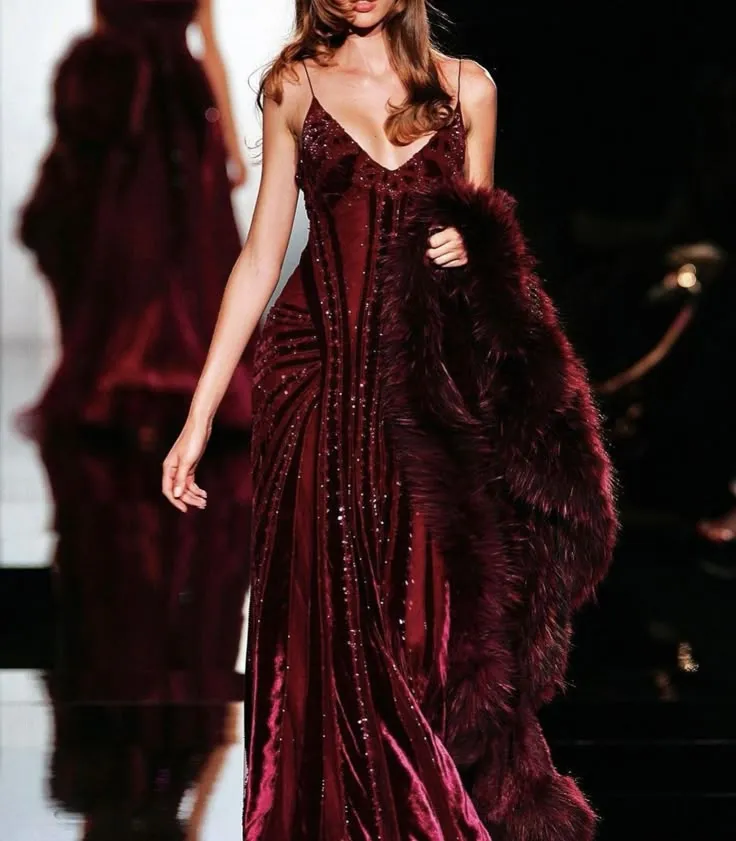
Photo: luxury velvet fashion editorial runway gown jewel tones, via i.pinimg.com
There is a particular kind of pleasure that no digital experience can replicate: the sensation of drawing your fingers across a length of fine velvet, feeling its dense pile yield softly beneath your touch. In an era defined by the frictionless and the ephemeral, that pleasure has become something close to radical. It should come as no surprise, then, that velvet — the fabric of Renaissance courts, Gilded Age parlors, and Hollywood's golden screen — has stormed back into the center of luxury fashion with a force that feels less like a revival and more like a reckoning.
At Velourss, we have long understood what the broader market is only now beginning to articulate: that true luxury is not merely visual. It is sensory, dimensional, and deeply human.
A Textile With Centuries of Consequence
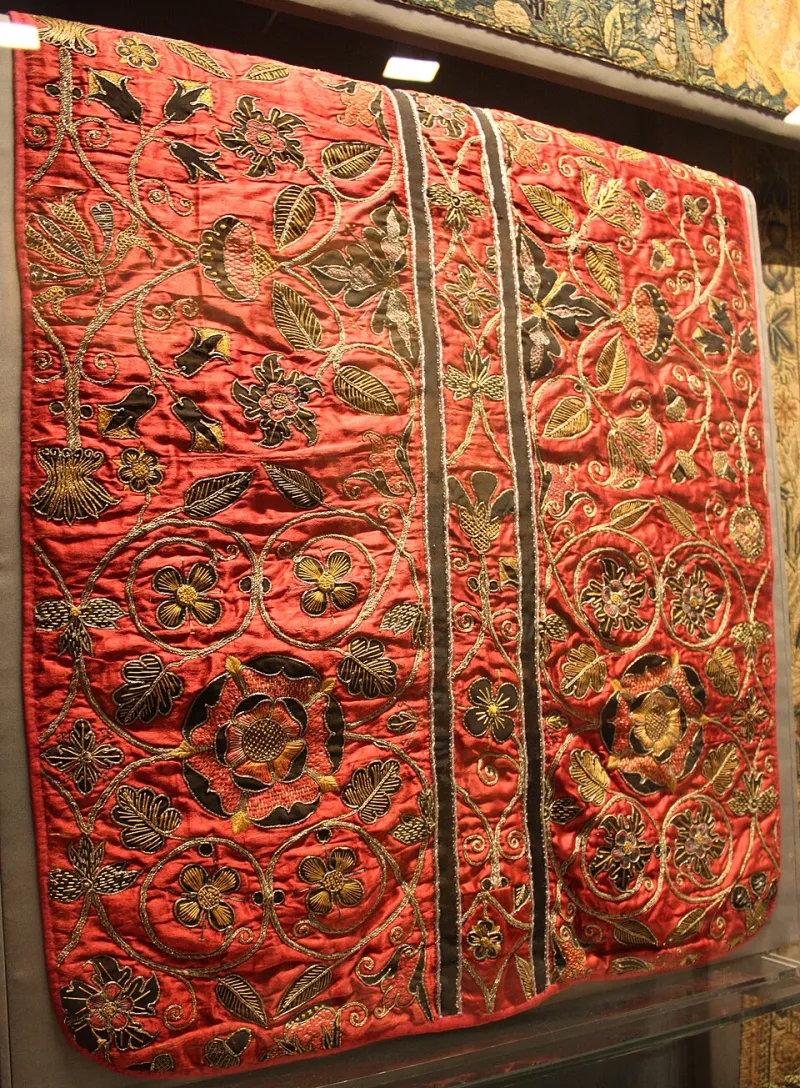
Velvet's authority over the imagination is not accidental. Its origins trace to the silk-weaving guilds of medieval Italy and the opulent courts of Persia and China, where the fabric's production was so labor-intensive that ownership was, quite literally, a privilege of royalty. By the time the Italian Renaissance reached its apex, velvet had become the definitive emblem of power — worn by popes, doges, and merchant princes who understood that cloth could communicate status more eloquently than words.
In America, velvet carried that aristocratic weight into new territory. The Gilded Age interiors of Newport mansions were draped in it. Old Hollywood translated its richness onto the silver screen, wrapping icons like Marlene Dietrich and Katharine Hepburn in midnight-blue and emerald gowns that made the very concept of glamour feel tangible. Even through the democratic upheavals of the twentieth century, velvet retained its gravitational pull on those who sought to signal refinement.
What distinguishes this current moment, however, is something more nuanced than nostalgia. Today's luxury consumer is not reaching backward — they are reaching inward.
The Runway as Testimony
The evidence from recent collections is unambiguous. At New York Fashion Week, multiple prominent houses structured their eveningwear around velvet as a primary fabric rather than an accent, presenting structured blazers, wide-leg trousers, and floor-length column gowns in a palette that ranged from deep jewel tones to unexpected dusty mauves and burnished coppers. European houses reinforced the message: velvet appeared in tailored suiting at several Milan presentations, while Paris saw it elevated into sculptural daywear — a development that would have seemed startling even five years ago.
What is particularly telling is velvet's migration beyond its traditional evening-only territory. Designers are now deploying it in contexts that signal confidence rather than occasion — a velvet blazer worn over tailored trousers for a boardroom lunch, a velvet midi skirt paired with a crisp silk blouse for an afternoon gallery opening. This versatility marks a genuine shift in how the fabric is being positioned: not as costume, but as wardrobe architecture.
The textile innovation underpinning these collections deserves attention. Modern luxury velvet is not the heavy, high-maintenance fabric of previous centuries. Advances in weaving technology and fiber blending — silk-velvet, velvet-backed cashmere, and precision-cut devore techniques among them — have produced textiles that retain velvet's characteristic depth and luminosity while offering a suppleness and drapeability suited to contemporary silhouettes.
The Psychology of Tactile Investment
To understand velvet's appeal to today's affluent American consumer, one must understand a broader cultural shift. After more than a decade in which minimalism functioned almost as a moral position — clean lines, neutral palettes, conspicuous restraint — there is a palpable appetite for clothing that makes a more affirmative statement. Not louder, necessarily, but richer. More present. More considered.
Research in consumer psychology consistently demonstrates that tactile engagement deepens the perceived value of luxury goods. When a garment invites touch, it creates an immediate, pre-cognitive signal of quality that no amount of branding can manufacture. Velvet is, in this sense, the most honest of luxury fabrics: its value is self-evident to the fingertips before the eye has time to analyze a label.
For the discerning buyer who approaches their wardrobe as a form of considered investment — selecting pieces that will endure stylistically and physically across seasons and decades — this is a compelling proposition. A well-constructed velvet blazer or evening gown carries within its pile a kind of permanence that fast fashion can never approximate.
Color as Language
One of the most distinctive aspects of velvet's current moment is the sophistication with which color is being employed. The fabric's unique optical property — its pile reflects light differently depending on the angle of view, creating that characteristic depth and subtle shift of tone — makes color in velvet a living thing rather than a fixed statement.
This season's most compelling offerings lean into that dynamism. Midnight navy that shifts toward indigo at the shoulder. Forest green with a warmth at the hip that reads almost bronze in direct light. Burgundy so deep it borders on black in shadow. These are not colors chosen to be seen from across a room; they are colors designed to reward proximity, to reveal themselves gradually to those close enough to appreciate them.
For the American consumer navigating the intersection of professional presence and personal expression, this quality is particularly valuable. Velvet communicates authority without aggression, richness without ostentation — a distinction that matters greatly in the social registers of cities like New York, Chicago, and San Francisco, where the codes of luxury are read with considerable precision.
The Anti-Minimalist Statement
It would be reductive to frame velvet's return simply as a backlash against minimalism. The more accurate framing is that it represents a maturation of how luxury is understood. The consumer who once found satisfaction in the perfect white shirt and a single gold chain has not abandoned their taste; they have deepened it. They are now asking not just whether a garment is restrained, but whether it is meaningful — whether it engages them on a level that justifies the investment of both their resources and their attention.
Velvet answers that question with an emphatic affirmative. It demands nothing of the wearer except the confidence to inhabit it fully. In return, it offers something that the most perfectly constructed cotton poplin never can: the sense that the garment itself is participating in the experience of wearing it.
At Velourss, that exchange — between a textile of genuine consequence and a wearer of genuine discernment — is precisely what we exist to facilitate. Velvet's return to the forefront of luxury fashion is not a trend to be observed from a distance. It is an invitation to be accepted.