The Texture Revolution: How Maximalist Luxury Is Overthrowing Fashion's Age of Restraint
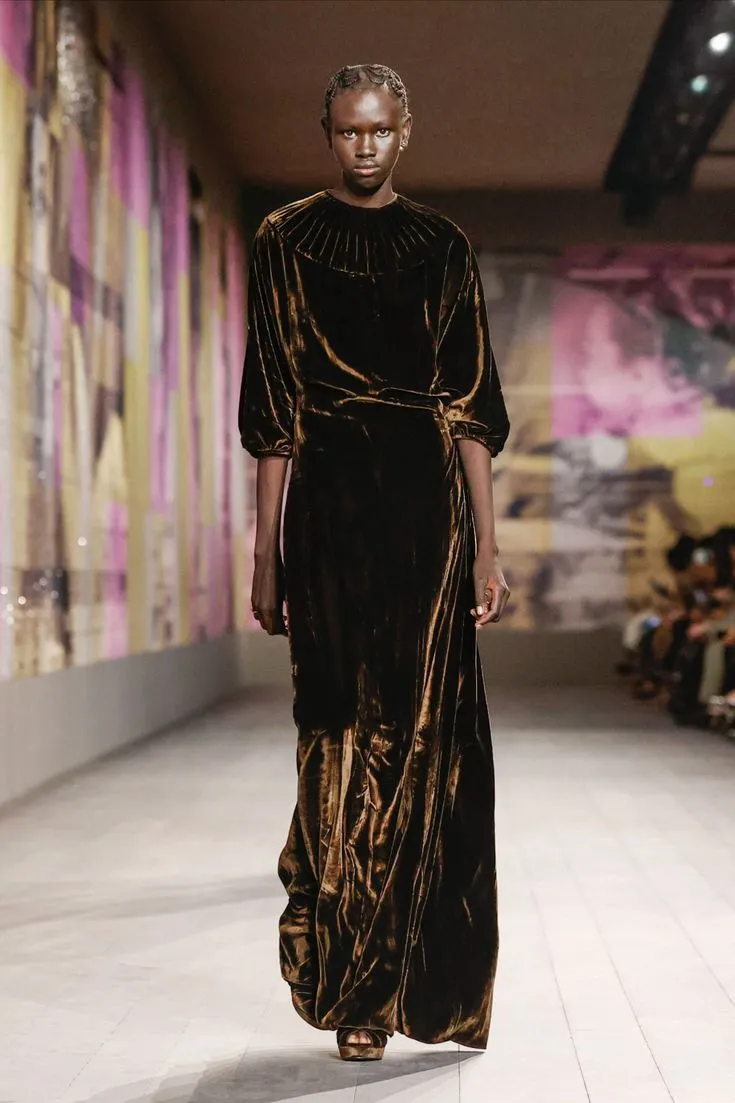
Photo: luxury velvet fashion runway maximalist jewel tone gown editorial, via i.pinimg.com
For the better part of a decade, the prevailing gospel of high fashion preached restraint. Clean lines. Muted palettes. The studied absence of ornament. Whisper-quiet luxury became the aspiration of the discerning American consumer — a philosophy that equated sophistication with subtraction. Yet something has shifted, quietly at first and now with unmistakable force, across the runways of New York, Milan, and Paris. The age of austerity is yielding to something far more visceral, and velvet stands at the vanguard of that transformation.
The Runway as a Declaration
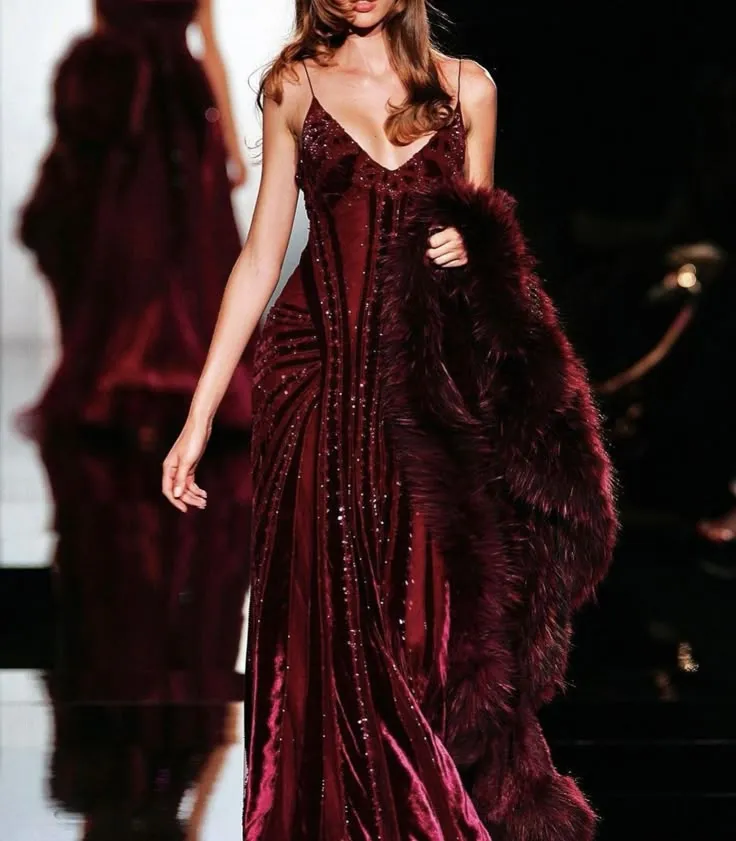
The evidence arrived with compelling clarity across recent fashion weeks. At New York Fashion Week, several American luxury houses returned to dramatically textured silhouettes — voluminous velvet coats in deep jewel tones, structured blazers with crushed pile surfaces, and evening gowns that appeared to absorb and reflect light simultaneously. Milan offered its own testimony: storied Italian ateliers sent models down the catwalk in layered velvet separates that challenged every assumption about what contemporary elegance should look like.
This was not nostalgia. Designers were not reaching backward toward Victorian excess or 1970s maximalism for its own sake. Rather, they were responding to a collective cultural appetite — one shaped by years of pandemic-era stillness, a saturation of digital imagery, and a growing consumer desire for things that can be experienced through more than a screen. Texture, by definition, cannot be fully perceived through a photograph. It demands presence. It demands touch. And that demand is precisely what makes it so compelling to the luxury market right now.
The Quiet Luxury Backlash
The movement known as "quiet luxury" — characterized by logoless garments, cashmere in bone and camel, and an almost clinical avoidance of visual noise — served a genuine cultural moment. It spoke to consumers who associated ostentation with insecurity and valued the insider knowledge required to recognize quality without obvious signals. For a time, that sensibility resonated deeply among affluent American buyers.
But taste is never static. Cultural critics and luxury market analysts have begun to observe a fatigue setting in — not with quality or craftsmanship, but with the emotional flatness that an exclusively minimal wardrobe can produce. When every piece in one's closet speaks in the same measured whisper, the wardrobe loses its capacity to communicate the full range of a wearer's personality and ambition.
Velvet offers something that no amount of perfectly cut cashmere can provide: a conversation. The fabric speaks before its wearer says a word. Its depth of color, its directional sheen, its almost magnetic invitation to touch — these are qualities that create genuine human connection in a way that studied neutrality cannot replicate.
Designers Speak to the Shift
The language emerging from luxury design studios reflects this recalibration. Designers who once championed the power of the unadorned have begun speaking about "emotional texture" — the idea that a garment should provoke a sensory and psychological response, not merely a cognitive appreciation of its construction. Velvet, with its dense pile and its capacity to hold color at extraordinary saturation, has become the preferred medium for this new emotional vocabulary.
Several American luxury designers have spoken publicly about the influence of their clientele in driving this shift. High-net-worth consumers, they note, are no longer content to dress in ways that require explanation. They want garments that communicate immediately, that make a room aware of their presence, and that reward the people fortunate enough to be near them with a tactile experience that feels genuinely rare. Velvet delivers all of this without resorting to logomania or the kind of gaudy ornamentation that truly sophisticated buyers would reject.
The American Consumer's New Appetite
The American luxury consumer has always occupied a distinctive position in the global fashion ecosystem. Pragmatic yet aspirational, influenced by both European tradition and a distinctly domestic culture of self-expression, the affluent American buyer tends to adopt fashion movements on their own terms — absorbing international trends and reinterpreting them through a lens of personal narrative.
The current embrace of maximalist texture follows this pattern precisely. What American luxury buyers are seeking is not European excess transplanted wholesale onto their wardrobes. They are seeking permission — permission to be seen, to be felt, to occupy space with confidence and intention. A velvet blazer in midnight blue worn to a client dinner in Manhattan is not a costume. It is a declaration of self-possession. A crushed velvet wrap skirt paired with a silk blouse at a gallery opening in Los Angeles is not an attempt to impress. It is the natural expression of someone who has moved beyond the need to understate.
Texture as Identity
There is a broader cultural conversation embedded within this fashion shift. After years in which digital life flattened human experience into two dimensions — the scroll, the feed, the endless parade of images — there is a palpable cultural hunger for the three-dimensional. For things that have weight, warmth, and physical presence. Velvet, perhaps more than any other fabric in the luxury canon, satisfies this hunger directly.
Its pile creates shadow and light within a single garment. Its surface changes character depending on the direction of the weave, the quality of the base fabric, and the intensity of the dye. No two velvet pieces occupy the same visual space in precisely the same way. This inherent individuality — the fact that velvet is, in a meaningful sense, impossible to fully standardize — makes it a natural ally for consumers who wish to assert their distinctiveness in a world that often rewards conformity.
What Comes Next
The trajectory of this texture revolution suggests that velvet's prominence in luxury fashion is not a seasonal phenomenon. It reflects a genuine recalibration of values among the consumers who drive the high end of the American market. As designers continue to explore the full expressive range of premium textiles — incorporating velvet into tailoring, eveningwear, outerwear, and even accessories — the fabric's presence in the cultural conversation will only deepen.
For those who have long understood velvet's unique capacity to transform a garment from clothing into experience, this moment feels less like a trend and more like a long-overdue recognition. The rebellion against minimalism was never really about rejecting quality or craft. It was about reclaiming the full sensory richness that luxury, at its finest, has always been capable of delivering.
At Velourss, that richness is not a rebellion. It is simply the natural order of things.