When Velvet Becomes Noise: Reclaiming Exclusivity in a Fabric Saturated Market
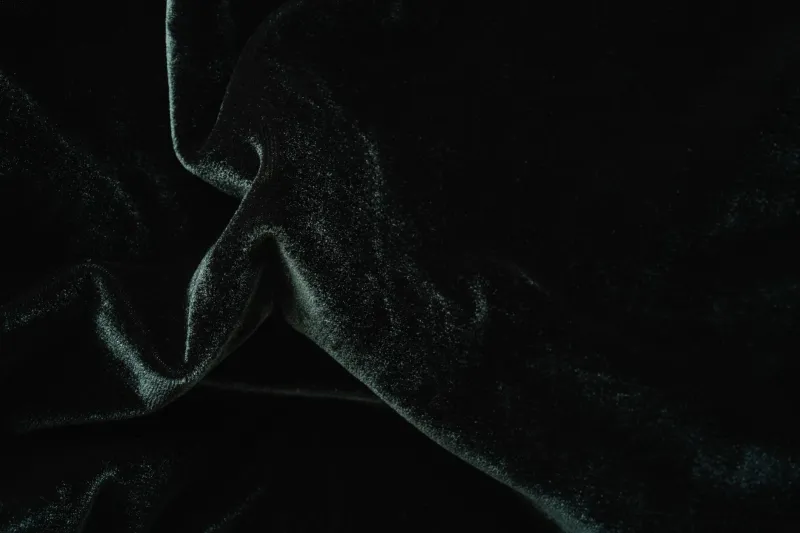
There is a particular discomfort that arrives when a fabric you have worn with quiet conviction for years begins appearing on the clearance rack at a fast-fashion chain. It is not snobbery, precisely—it is something closer to the feeling a devoted reader experiences when a beloved novel is adapted into a blockbuster film. The essence persists, but the intimacy is altered. For those who have understood velvet as a private language of luxury, its current ubiquity demands a recalibration of how that language is spoken.
America's fashion market has absorbed velvet at a velocity that would have seemed improbable a decade ago. What was once a textile reserved for evening wear, theatrical costume, and the most considered wardrobes has migrated into athleisure, home goods, and $29 blazers sold in mall anchor stores. The fabric's inherent sensory appeal—that unmistakable interplay of light and pile, that invitation to touch—translates commercially at almost any price point. And that, paradoxically, is precisely what threatens its power for those who value it most.
The Democratization Dilemma
Democratization in fashion is not inherently a destructive force. When quality craftsmanship becomes more accessible, that represents genuine cultural progress. The problem specific to velvet, however, is that its luxury identity has always been inseparable from its material properties—properties that simply cannot be replicated at a lower price point without fundamental compromise.
A polyester velvet, however convincingly it mimics the silhouette of silk or cotton velvet, behaves differently under light. It pills under friction. It flattens with wear in ways that resist restoration. It lacks the thermal responsiveness—that particular warmth and breathability—that makes a well-constructed velvet garment feel like a second skin rather than a costume. The visual similarity between a $45 velvet dress and a $450 one may fool a photograph; it will not survive an afternoon.
Yet the proliferation of imitations creates a perceptual problem for even the most discerning consumer. When the eye has been trained by constant exposure to approximate velvet, the extraordinary qualities of the genuine article become harder to register at a glance. Exclusivity, once communicated through the fabric itself, must now be encoded differently.
The Principle of Calculated Invisibility
The most sophisticated response to oversaturation is not louder assertion but quieter confidence. In the current market, the most powerful velvet choices are frequently those that resist the impulse toward conspicuousness—garments that reveal their quality gradually, through proximity and attention, rather than broadcasting it from across a room.
This is what might be termed calculated invisibility: the deliberate selection of velvet pieces that communicate their distinction only to those equipped to recognize it. A midnight-blue velvet blazer in a weight and drape that no fast-fashion producer could economically achieve. A deep burgundy velvet trouser whose pile moves with such precision that it renders lesser versions immediately legible by comparison. These pieces do not announce themselves. They simply exist at a register that imitations cannot reach.
For the Velourss customer who has built a relationship with premium textiles over years, this approach will feel intuitive. The goal was never to be seen wearing velvet—it was always to inhabit a certain quality of experience, and to allow that experience to shape how one carries oneself in the world.
Reading the Room: Context as a Form of Curation
Another dimension of reclaiming velvet's exclusivity lies in contextual intelligence—understanding not just what to wear, but when and where the fabric's presence will be most legible to the right audience.
In American professional and social contexts, velvet retains its full authority in settings where textile literacy is high: gallery openings, private dining, cultural philanthropy events, and the more formal registers of East and West Coast social life. In these environments, the difference between a well-chosen velvet and a trend-chasing approximation remains immediately apparent to the people whose opinions carry weight.
Conversely, deploying velvet in casual or high-volume contexts—where it blends indistinguishably into a visual landscape already crowded with the fabric—dilutes its impact without serving any meaningful aesthetic purpose. Restraint in occasion is as important as restraint in quantity.
The Investment Framework: Fewer Pieces, Greater Depth
For those reconsidering their relationship with velvet in light of the current market, a reduction-and-deepening strategy offers the clearest path forward. Rather than accumulating velvet across multiple categories and price points, the more authoritative approach involves concentrating investment in a smaller number of genuinely exceptional pieces—garments whose construction, fiber content, and design intelligence place them categorically beyond comparison with mass-market offerings.
This means prioritizing provenance. It means understanding the difference between crushed velvet and cut velvet, between piece-dyed and yarn-dyed construction, between the behavior of silk velvet and that of cotton or viscose. It means developing a relationship with the fabric that is, in the truest sense, educated—one that allows you to evaluate a garment not by its price tag or its label, but by the evidence of your own hands and eyes.
At Velourss, this philosophy of depth over breadth has always informed our editorial perspective. The fabric's luxury positioning is not something that can be maintained by any single brand or consumer in isolation—it is a collective practice, sustained by the choices of those who understand what they are protecting.
Wearing Velvet as a Considered Act
There is a certain irony in the current moment: velvet has never been more visible, yet the conditions for wearing it with genuine authority have never required more deliberation. The fabric's omnipresence means that every choice now carries greater weight. The question each appearance asks is whether you are contributing to the fabric's meaning or simply borrowing its surface.
The answer lies not in avoidance—withdrawing from velvet entirely would be its own form of capitulation—but in the quality of attention brought to each decision. Which fiber? Which construction? Which occasion? Which silhouette? These are not trivial questions. They are the vocabulary of a language that remains worth speaking, provided one takes the time to speak it well.
In a market flooded with approximations, the true luxury of velvet is no longer simply the fabric itself. It is the knowledge required to choose it wisely—and the discipline to wear it only when that knowledge is fully engaged.