The Most Contested Garment in the Room: Velvet, Memory, and the American Estate
In four decades of probate practice, Chicago estate attorney Marlene Okafor has overseen the division of lakefront properties, private companies, and seven-figure investment portfolios. Rarely, she says, do those assets generate the phone calls. The calls come when a garment disappears from an estate inventory.
"I have watched adult siblings stop speaking to one another over a crushed-velvet opera coat from the 1930s," Okafor says. "Not over the house. Over the coat. And once you understand what that coat holds — the funerals it attended, the man it belonged to, the way it smelled of cedar and cigar — the dispute stops being irrational. It becomes entirely legible."
Across the United States, a quiet pattern is emerging in the settlement of significant estates: the most contested items are frequently not the most valuable ones. They are the tactile ones. And chief among them, attorneys and dealers agree, is velvet.
The Hierarchy of Heirlooms
Conventional wisdom holds that heirs fight over jewelry. Estate professionals tell a more textured story. Jewelry is divisible — a stone can be reset, a ring resized. Velvet resists division. A garment is singular, unalterable, and utterly specific to the body that wore it.
Vintage dealer Ruth Calloway, who operates out of a second-floor atelier in Savannah's historic district, has built a quiet specialty in post-estate acquisitions. "I can tell within minutes of meeting a family which garment is going to be the problem," she says. "It's the one nobody mentions for the first hour. The velvet dinner jacket folded in a hatbox. Everyone saw it. Nobody said anything. Then the executor opens the box and the room changes."
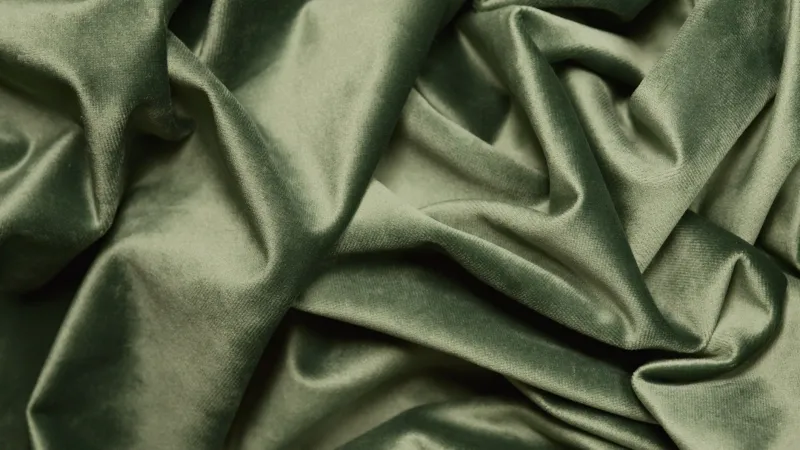
Calloway attributes velvet's outsized pull to what she calls "witness fabric." Unlike a painting or a photograph, a velvet garment was present — draped over shoulders at graduations, gallery openings, second weddings, and hospital bedsides. Its pile holds the memory of use in a way that smooth textiles do not. Crush marks, she notes, are read by heirs the way archivists read marginalia.
When Fabric Becomes Proxy
Family therapists and estate mediators point out that inheritance disputes are rarely about the object itself. A contested velvet evening wrap is frequently a proxy for older, unspoken grievances: who spent more time with the deceased, who was favored, who was present at the end.
"The garment gives the argument a shape," says Dr. Iris Halloway, a Boston-based mediator who works with high-net-worth families. "It is easier to fight about Mother's emerald velvet coat than to say, out loud, that you feel you were the one who cared for her. The coat becomes the language."
This dynamic is amplified in American families shaped by geographic dispersion. Where siblings may live in Seattle, Austin, and Manhattan, the family home is sold and its contents distributed by photograph and shipping crate. A garment that once required a visit to touch now arrives in a box — and its absence from one's own box lands with disproportionate force.
The Attorney's Counsel
For estate planners, the lesson is increasingly practical: address the textiles. Okafor recommends that clients with significant garment collections attach a separate memorandum of disposition — a non-binding but influential document specifying who receives which pieces, ideally written while the owner is living and able to explain the reasoning.
"The explanation matters more than the assignment," she says. "'The velvet jacket goes to my daughter because we bought it together in New Orleans the year her mother passed' defuses a dispute before it begins. Without the story, the coat is just a coat, and everyone projects their own claim onto it."
Some families have gone further. Calloway recalls one estate in which the deceased left instructions for three of his velvet pieces to rotate annually among his children — a shared custody arrangement, formalized in writing. "It sounds eccentric," she says, "until you realize he understood something most people miss: the garment was the relationship. He wanted the relationship to continue."
What Fabric Reveals
There is a broader reading here, one that speaks to the peculiar power of material things in an increasingly digital age. Heirs who never look at a deceased parent's email archives will spend an afternoon with a closet. The garments are the archive that can be touched.
And velvet, of all textiles, seems to invite the touch. Its surface responds to contact; it records where hands have been. Perhaps that is why, when the estate is settled and the accounts are closed, it is the velvet that lingers — folded in a drawer in a house it was never intended for, taken out on rare evenings, held a moment longer than necessary.
The estate attorneys will tell you the lesson is documentation. The dealers will tell you it is provenance. But the heirs, when they are honest, will tell you something simpler: they were not fighting over fabric. They were fighting over the right to keep touching the past. Velvet, more than any other cloth a family owns, simply made that visible.