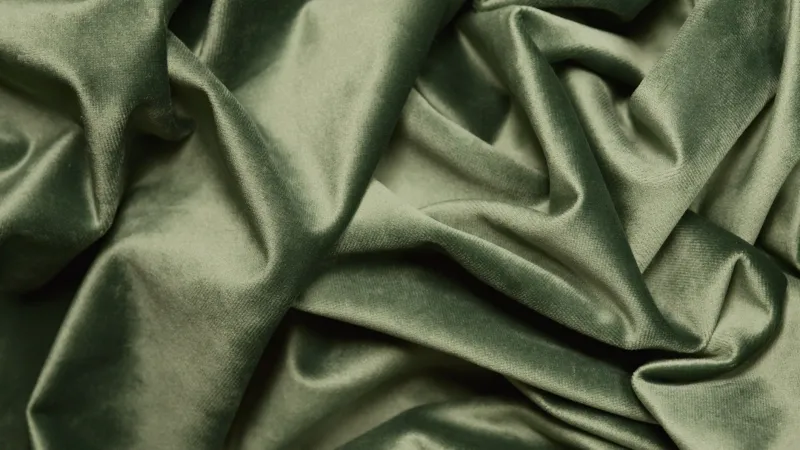
Miles of Pile: A Road Trip Through America's Last Velvet Country
There is a moment in every mill visit when someone hands you a swatch and says nothing. They wait. They want to see whether your fingers know what to do.
I had driven nearly six hundred miles to get to that moment, and my fingers, I am sorry to report, hesitated. But that is precisely why this trip exists — because velvet, more than any other textile in the American wardrobe, demands to be understood in person. You can read about pile density and silk blends until the citations blur together. You cannot read the weight of a loom's rhythm in your hands, or hear the particular hush of a good nap being sheared. For that, you need a car, a map of fading mill towns, and time.
So I drove. Roughly 1,800 miles through Pennsylvania, New York, New Jersey, and down into the Carolinas, visiting the working mills, family fabric shops, and institutional archives where American velvet still lives. What follows is less a travel guide than a field report — and a case that seeing velvet made is the fastest education in its value that money can buy.
The Road Begins Where the Looms Once Ruled
Any honest survey of American velvet has to start in Philadelphia and its orbit. The city was, for nearly a century, the pile-fabric capital of the Western Hemisphere — a claim staked by immigrant weavers from Lyon and Crefeld who carried their trade secrets across the Atlantic in the nineteenth century. Most of the great mills are gone now, their brick shells converted to lofts and breweries. But not everything has gone quiet.
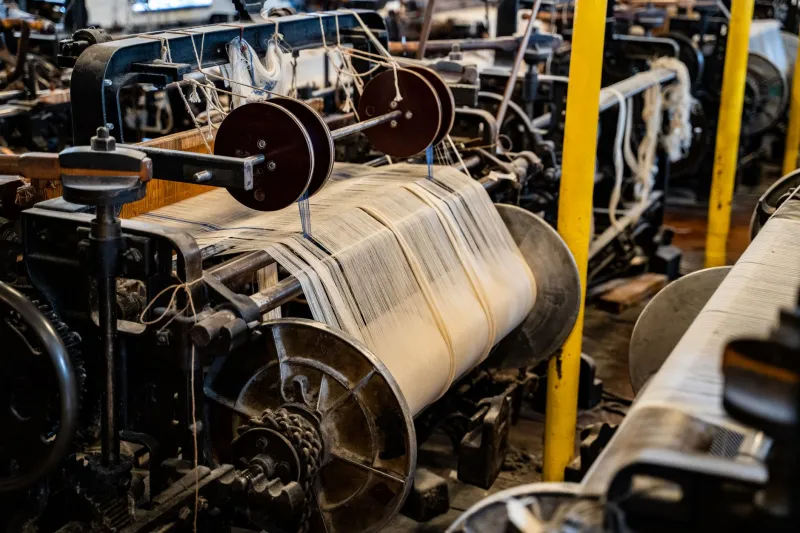
At a small contract-weaving operation on the city's industrial fringe, I watched a double velvet loom run through a run of upholstery-grade cotton pile destined for a New York design house. The foreman, a third-generation weaver who asked me to skip his name in print, explained the arithmetic of his trade without sentiment: a single yard of figured velvet can pass through more than a hundred individual processes. "People ask why it costs what it costs," he said. "I tell them to come watch. Nobody asks twice."
That sentence became the thesis of the whole trip. Price, in velvet, is simply time made visible.
Archives as Shrines
Two days north, in the Hudson Valley, I spent a morning at a textile archive housed in a former mill — one of several institutions in the Northeast quietly preserving pattern books and swatch libraries that document American velvet's golden age. The archivist pulled a ledger from the 1920s: pages of hand-painted colorways, each annotated with loom settings, weaver initials, and client names. Some of the clients were American estates whose names still carry weight in certain circles.
What struck me was not nostalgia but continuity. Several of the patterns in that ledger are being reinterpreted today by small American ateliers — the subject of our earlier reporting on the quiet renaissance of domestic velvet craftsmanship — using looms their grandparents would recognize. The archive is not a mausoleum. It is a supply chain of ideas.
If your own route brings you through the region, call ahead. These collections exist on modest budgets and the goodwill of people who believe fabric history matters. A respectful visitor with genuine interest is usually welcomed; a tourist treating it as a photo stop is not.
Southbound: Where the Trade Went to Survive
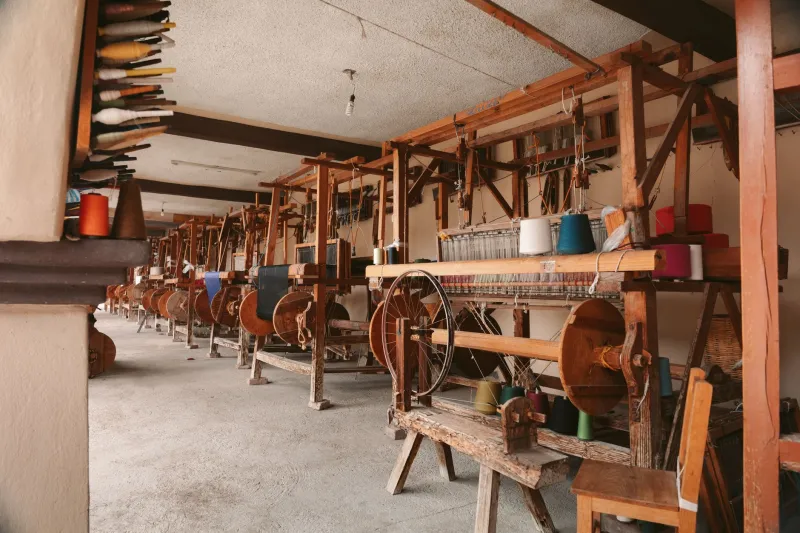
The southern leg of the trip carried its own lessons. The Carolinas absorbed much of the American textile industry as costs pushed production out of the Northeast, and velvet — or its close cousins, velveteen and cut pile — found refuge there. In a small town outside Charlotte, I visited a family operation that has woven pile fabrics for four generations. The current principals, siblings in their sixties, showed me the original wooden beam their grandfather used to ship his first order.
They no longer chase fashion cycles. Their velvet goes into furniture, theater curtain, liturgical vestments, and the occasional custom garment order from a designer who found them the way everyone finds them: by word of mouth, one introduction at a time. There is no e-commerce. There is a phone that rings.
Standing in that weave room, surrounded by the deep hum of machinery older than both siblings, I understood something the luxury market tends to obscure: scarcity is not a marketing strategy here. It is simply the honest description of how many hands can do this work.
Why the Pilgrimage Matters
A reasonable reader may ask whether any of this changes how one should dress. I would argue it changes everything about how one should buy.
When you have watched a weaver stop a loom to repair a single broken end — knowing the run's schedule slips with every stop — the notion of velvet as merely "a nice fabric" collapses. It becomes what it has always been: one of the most labor-intensive textiles ever commercialized, carrying within each yard an invisible ledger of hours. Our earlier guide to judging velvet by hand described the vocabulary of the connoisseur; the road trip supplies the grammar's origin story. The two belong together.
And there is a civic dimension. Every mill visit I made ended with some version of the same sentence: orders are what keep the lights on. The American velvet trade does not need sentiment. It needs customers who understand why a domestically woven yard commands its price — and who are willing to pay it.
Planning Your Own Route
For those inclined to make the drive, a few practical notes. Mill towns between Philadelphia, the Hudson Valley, and the Carolina piedmont form a natural corridor; allow at least a week and contact operations well in advance, as most welcome visitors by appointment only. Fabric shops in New York's Garment District and Philadelphia's fabric row remain essential stops — places where you can compare a silk-blend pile against a cotton velveteen under the same light and let your fingertips settle the debate.
Bring a journal. Bring patience. And when someone hands you a swatch and waits — touch it the way you would want it touched.
The road, like the fabric, rewards those who slow down enough to feel it.