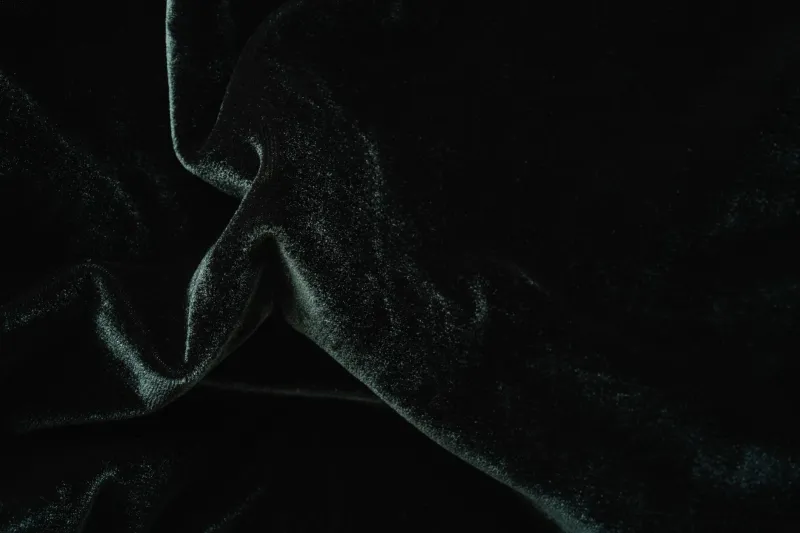
Looms of the New World: The Quiet Renaissance of American Velvet Craftsmanship
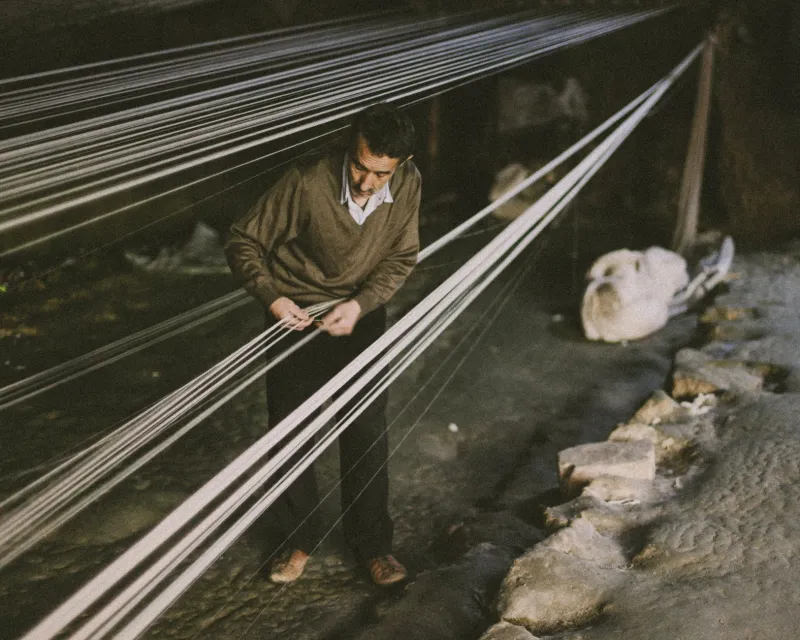
There is a moment, in a small weaving workshop outside Providence, Rhode Island, when the shuttle pauses mid-passage and the weaver leans forward to inspect the pile with nothing but a jeweler's loupe and decades of intuition. No machine would catch what she is looking for. No algorithm could replicate the judgment in her fingertips. This is velvet as it was made for centuries — and, against considerable odds, as it is still being made in America.
For a generation of affluent American consumers, the phrase "domestically produced luxury" has evolved from a marketing nicety into a genuine pursuit. And no fabric embodies that shift more completely than velvet: a textile so demanding of skill that its survival on U.S. soil depends on a handful of boutique mills, family workshops, and stubbornly talented artisans.
A Fabric That Refuses to Be Rushed
Velvet has never been an easy undertaking. Unlike flat weaves, it requires a secondary set of warp threads to be drawn up over wires and cut into pile — a process historically so laborious that Renaissance sumptuary laws in Europe restricted velvet to nobility. That difficulty is precisely what makes domestic production remarkable today.
The American mills still practicing the craft operate at a scale that would baffle a corporate procurement office. Batches are measured in yards, not miles. Colorways are developed in conversation with the client, not dictated by seasonal trend forecasts. One mill in the Carolinas, founded by a family of upholstery weavers, still adjusts its dobby looms by hand each morning — a ritual the current owner describes as "waking the machine up gently."
The economics are unforgiving. Offshore velvet can be produced at a fraction of the cost, and for the mass market, it usually is. What the boutique mills sell is not merely fabric but provenance: a traceable chain from fiber to finished yard, with a human name attached at every stage.
The New Provenance-Minded Consumer
Something has shifted in the American luxury psyche. The same buyers who once equated prestige with European heritage labels increasingly ask a different question: who made this, and where?
Part of this is skepticism. A decade of supply-chain scrutiny has taught affluent consumers that "imported" can mean anything from Florentine ateliers to unregulated industrial compounds. Domestic production, by contrast, offers transparency as a feature, not a slogan. When a velvet jacket carries a tag naming the mill, the weaver, and the fiber origin, it functions less like a garment and more like a signed edition.
Part of it is also patriotism of a refined, non-performative kind. In cities from Nashville to Portland, a quieter form of status has emerged — the ability to point to a piece and say, "This was made forty minutes from my house." In an era when global luxury is available to anyone with a credit card, locality has become the scarcer commodity.
The Craftspeople Behind the Pile
Spend time in these workshops and a portrait emerges of a trade sustained almost entirely by devotion. Many of the master weavers learned their skills through apprenticeships that no longer formally exist, absorbing techniques from mentors who entered the industry when American textile manufacturing was still a national backbone.
One dyer we spoke with, who works exclusively with small-batch natural and low-impact dyes, described velvet color as "a living thing — it shifts under different light, and you have to know when to stop." Her color cards, hand-painted on swatch after swatch, are studied by fashion designers who fly in from New York and Los Angeles for a single afternoon.
These are not nostalgia operations. Several mills have invested in hybrid approaches: vintage looms fitted with modern tension controls, sustainable fiber sourcing, and collaborations with young American designers who treat domestic velvet as a canvas for contemporary silhouettes rather than period costume.
What Domestic Luxury Really Means
The phrase "American-made luxury" invites easy caricature — flags on labels, heritage invoked as decoration. The reality among these mills is subtler and more compelling. Domestic luxury here means proximity: the designer can visit the loom. It means accountability: the person who wove the fabric stands behind it. And it means patience: a run of velvet may take weeks to complete, a timeline that reshapes how collections are conceived.
For the consumer, the premium price buys something increasingly rare in fashion — a relationship. Garments cut from American-milled velvet tend to come with their own stories: the third-generation mill, the wire-weaving technique saved from obsolescence, the dye lot named after the weaver's daughter.
An Investment in Continuity
There is a persuasive argument that buying from these mills is less a purchase than an act of preservation. Every yard commissioned helps keep specialized skills — wire weaving, pile cutting, small-batch dyeing — economically viable for another generation. In that sense, the affluent American consumer's willingness to pay more is not indulgence; it is stewardship.
The great trade routes of velvet once ran through Venice and Lyon. A modest but meaningful thread of that lineage now runs through Rhode Island, the Carolinas, and a scattering of unassuming workshops across the country. The fabric that emerges is unmistakably luxurious. But more than that, it is unmistakably American — woven slowly, worn proudly, and destined to outlast the season.