Before the Receipt, the Residency: Inside the 72-Hour Trials Reshaping Luxury Velvet Retail
In the flagship salons of Madison Avenue and the quiet back rooms of San Francisco's premium ateliers, a new protocol is quietly rewriting the rules of luxury retail. It does not announce itself with signage or sales incentives. Instead, it takes the form of an unspoken courtesy extended to the store's most valued clientele: the opportunity to take a garment home — sometimes for a full seventy-two hours — before any money changes hands.
For conventional fashion, the practice would be heretical. For velvet, it has become something close to doctrine.
Why Velvet Refuses the Instant Decision
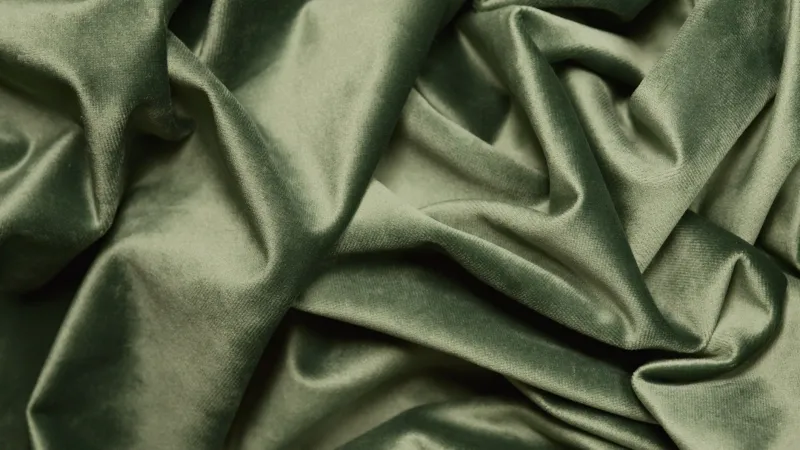
The reasoning begins with the fabric itself. Velvet is not judged the way silk or worsted wool is judged. Its defining quality — the pile — changes under real conditions: how it catches lamplight in one's own living room, how it compresses after an evening seated at a dinner table, how it feels against the skin after three hours rather than three minutes in a fitting room.
"A client can love a blazer under boutique lighting and regret it under her own chandelier," explains one personal shopper who works with established families along Boston's Beacon Hill. "The pile reads differently at home. The weight reads differently. These are not impulse purchases. They are adoptions."
The distinction matters because velvet carries an unusually high emotional and financial stake. A well-constructed evening coat or a silk-blend gown can represent a four-figure commitment. Affluent American consumers — the same buyers who might spend a weekend considering a watch or a piece of studio furniture — increasingly apply that same deliberative patience to their textiles.
The Boutique as Lending Library
At the vanguard of this shift are independent retailers in New York, Chicago, and Charleston who have formalized what was once an informal favor. Under these arrangements, a client may take two or three candidate pieces home for a designated trial period, typically spanning a long weekend. Some boutiques require a refundable deposit; others extend the privilege only to established patrons.
The mechanics are deliberately low-friction. Garments leave the shop on proper hangers, in garment bags, accompanied — in some cases — by care instructions written in-house. When the pieces return, they are inspected, steamed, and, if unpurchased, quietly returned to the floor.
Retailers who have adopted the model report a counterintuitive result: returns decline even as refunds become easier to obtain. "When someone buys after living with the piece," one Charleston boutique owner notes, "they rarely second-guess it. The doubt was resolved before the sale, not after."
The Psychology of Prolonged Contact
Consumer researchers have long observed that physical interaction deepens attachment — the so-called endowment effect, in which ownership, even temporary ownership, increases perceived value. But velvet's case is more particular. The fabric rewards familiarity. A buyer's first touch of velvet is curiosity; the tenth is judgment.
Clients describe the trial period in almost domestic terms. One Chicago collector recounts draping a candidate gown over a chair in her living room for two days, observing it in morning light and evening light before trying it on. "I wasn't deciding if I liked it," she says. "I was deciding if it belonged."
That vocabulary — belonging, residency, adoption — recurs among seasoned buyers. It suggests that for this clientele, velvet is purchased less as apparel than as an acquisition, closer in spirit to art or antique furniture than to seasonal fashion.
Time as the Ultimate Luxury Service
The seventy-two-hour trial also reflects a broader recalibration of what luxury service means in the American market. Concierge delivery, private appointments, and made-to-measure programs are now table stakes among premium retailers. What distinguishes the new model is that it sells not convenience but deliberation itself — the one commodity money cannot ordinarily accelerate.
Larger houses have taken note. Several American luxury retailers now build trial-friendly language into their client relationships, offering extended holds and at-home previews for textile-heavy pieces. The gesture costs little; the goodwill compounds. A client permitted to borrow before buying returns not only for the garment but for the judgment it implies.
There is, inevitably, a risk calculus. Velvet's pile can show pressure marks, and a garment that returns creased requires professional steaming. Boutiques that offer trials accept this as a cost of doing business with a clientele that measures trust in decades, not transactions.
A Practice Worth Borrowing
For the broader consumer, the lesson does not require a boutique's blessing. Whether purchasing velvet from a department store or a direct-to-consumer label, the principle of the residency applies: bring the piece home, live with it under your own light, sit in it, walk in it, and only then decide.
Velvet forgives many things, but it does not forgive haste. The pile reveals its character slowly — and the finest purchases, like the finest relationships, are those granted the time to prove themselves.