The Velvet Interior: Dressing Your Living Space with the Same Sophistication as Your Wardrobe
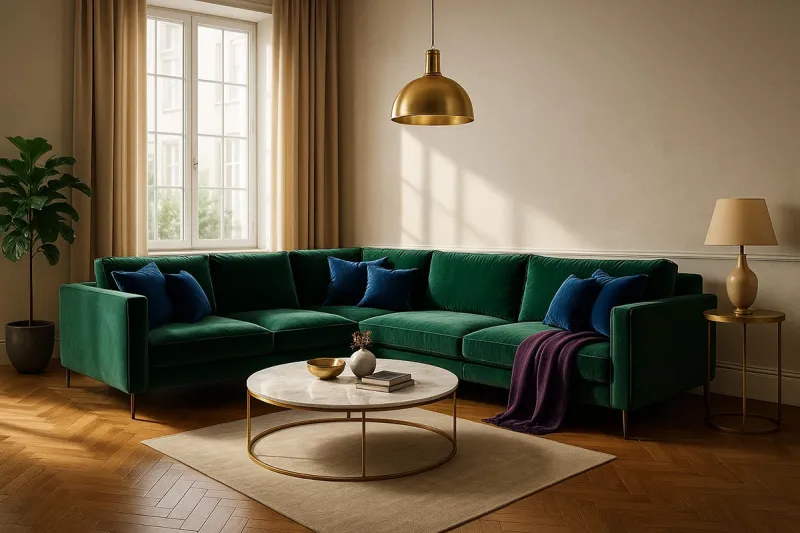
Photo: minimalist luxury living room velvet sofa jewel tone sophisticated interior design, via blogger.googleusercontent.com
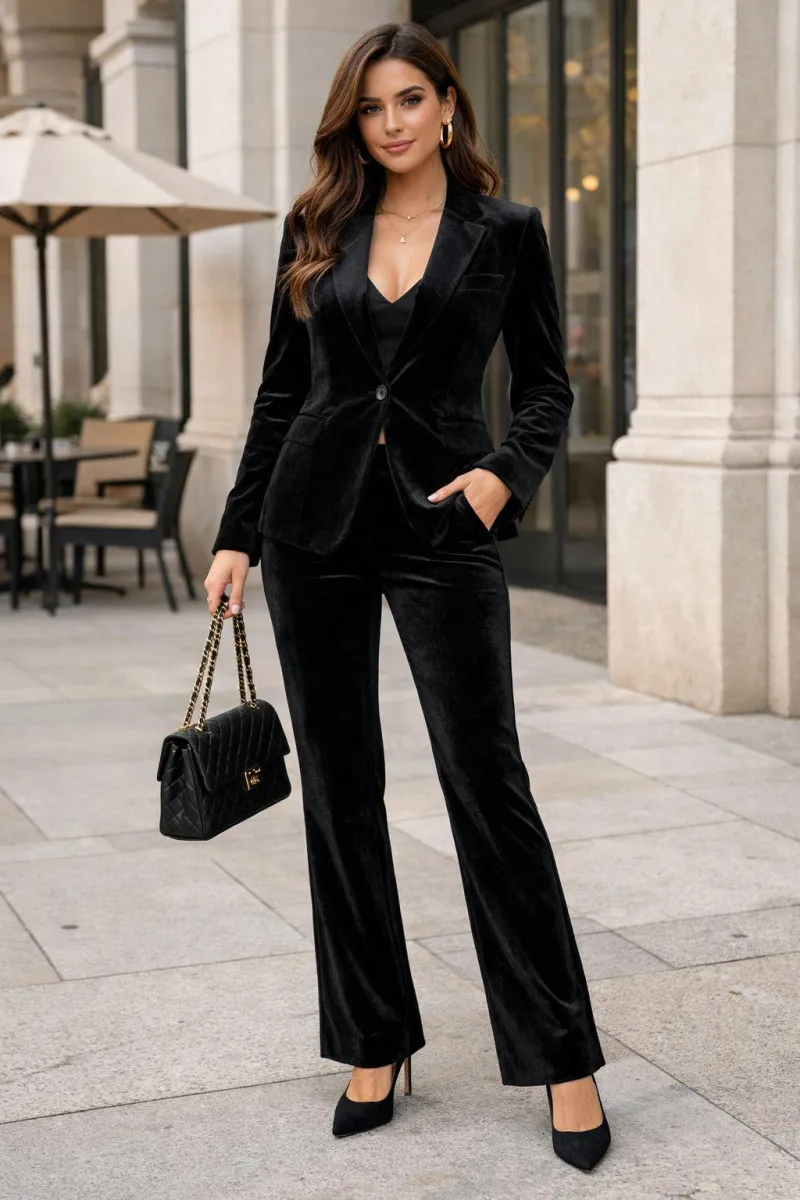
Consider the individual who selects a velvet blazer with the same deliberation applied to selecting a piece of fine art. The weight of the fabric, the depth of the pile, the way a particular shade of teal shifts from emerald to slate depending on the angle of the light — these are not incidental concerns. They are the criteria of someone who understands that material quality communicates something essential about the life being lived.
It follows, then, that the same sensibility would extend beyond the closet. Across American cities from Manhattan's Upper East Side to the hills of Los Feliz in Los Angeles, a recognizable aesthetic is emerging in the homes of those who regard luxury not as a category of product but as a continuous philosophy of living. At the center of this aesthetic, with remarkable frequency, is velvet.
Continuity of Philosophy: When Wardrobe and Interior Share a Language
The concept of a cohesive luxury lifestyle is not new. What is newer — and considerably more nuanced — is the degree to which textile choices are being understood as the connective tissue between personal style and interior design.
Interior designers working with high-net-worth clients in cities such as Chicago, Boston, and Miami report a notable shift in the conversations they are having. Clients increasingly arrive not with tear sheets from architecture magazines, but with references drawn from their own wardrobes. A client who dresses in deep jewel tones and tactile fabrics wants a home that reflects the same register. The language of the wardrobe — pile, drape, sheen, weight — has entered the vocabulary of interior decision-making in a way that feels entirely organic.
Velvet, in this context, functions as a kind of architectural material. It absorbs sound, it softens light, and it introduces a warmth that harder surfaces — marble, glass, polished metal — inherently lack. In a contemporary American home where minimalism has long held dominance, the strategic introduction of velvet creates a counterpoint that feels both modern and deeply considered.
Statement Furniture: The Anchor Pieces of a Velvet Interior
For most interiors, the primary expression of velvet as a design material begins with upholstered furniture. A single velvet sofa, properly scaled and positioned, can redefine the entire emotional register of a living room.
The principles that govern fabric selection for furniture closely parallel those applied to clothing. Natural fiber velvet — particularly cotton velvet for high-use pieces and silk velvet for more formal settings — offers a depth of color and a tactile richness that performance fabrics cannot replicate. Wool velvet, increasingly available through specialty American and European textile suppliers, presents another compelling option: its natural resilience makes it well-suited to the demands of daily domestic life without sacrificing visual refinement.
Silhouette matters in furniture as it does in fashion. A tufted velvet chesterfield sofa carries an entirely different aesthetic weight than a low-profile contemporary sectional upholstered in the same fabric. The former speaks to a classical tradition; the latter to a more edited, present-tense luxury. Neither is incorrect — but each demands a clarity of intention from the designer or homeowner who chooses it.
Color selection in velvet furniture follows the same logic that governs velvet dressing: jewel tones possess a timeless authority, while neutral velvets in champagne, stone, and warm ivory offer versatility without sacrificing sophistication. What both approaches share is an understanding that velvet, regardless of color, commands the room. It is not a fabric that recedes.
Architectural Accents: Velvet as a Structural Design Element
Beyond furniture, velvet is finding its way into the architectural fabric of luxury interiors in ways that reward close attention.
Velvet drapery, perhaps the most classical of these applications, is experiencing a considered revival in American homes where the emphasis has shifted from clean minimalism to what designers are calling "warm modernism" — spaces that retain structural clarity while embracing sensory richness. Floor-to-ceiling velvet panels in a deep charcoal or midnight navy do something that no sheer linen or cotton canvas can accomplish: they make a room feel genuinely inhabited. They introduce mass, texture, and a quality of light absorption that transforms even a high-ceilinged, architecturally spare space into something that feels intimate.
Velvet wall panels represent a more committed — and correspondingly more impactful — application. In dining rooms, home libraries, and primary suites, upholstered velvet panels serve simultaneously as acoustic insulation and as a visual statement of uncommon refinement. When the pile of the velvet is brushed in alternating directions during installation, the resulting tonal variation creates a surface that changes character across the hours of the day as natural light shifts — an effect that is, in its way, the interior equivalent of the way a fine velvet garment moves with the body.
Smaller accent applications — velvet throw pillows, velvet-trimmed bedding, velvet-upholstered headboards — offer entry points for those approaching this aesthetic for the first time. These pieces function much as accessories do in a wardrobe: they introduce the material without committing the entire space to a single register.
Care Considerations for the Velvet Home
The principles of velvet stewardship translate directly from wardrobe to interior. Pile direction must be respected — regular, gentle brushing with a soft-bristled upholstery brush maintains the nap and prevents the formation of permanent flat spots in high-use areas. Direct sunlight represents the most significant threat to velvet upholstery; UV exposure causes both color fading and fiber degradation at a rate that synthetic window coverings alone cannot fully prevent. UV-filtering window film, increasingly available in forms that do not compromise architectural aesthetics, offers a practical solution for sun-exposed spaces.
Professional cleaning by specialists familiar with natural fiber upholstery is advisable for significant pieces. Many American cities now support a small community of textile restoration professionals whose expertise extends across both garments and furnishings — a resource worth identifying before a cleaning need becomes urgent.
The Unified Aesthetic: Living in Alignment with What You Wear
There is something quietly powerful about a home that reflects, with the same precision as its owner's wardrobe, a fully articulated sense of what luxury means. When the velvet of a beloved evening coat and the velvet of a library sofa share not only a material identity but a philosophical one — chosen with equal deliberation, cared for with equal attentiveness — the result is a life lived in genuine alignment.
This is the promise of the velvet interior: not decoration, but coherence. Not accumulation, but intention. The same qualities that make a velvet garment worth owning make a velvet interior worth inhabiting — and both, at their finest, are expressions of the same enduring commitment to the beautiful and the well-made.